
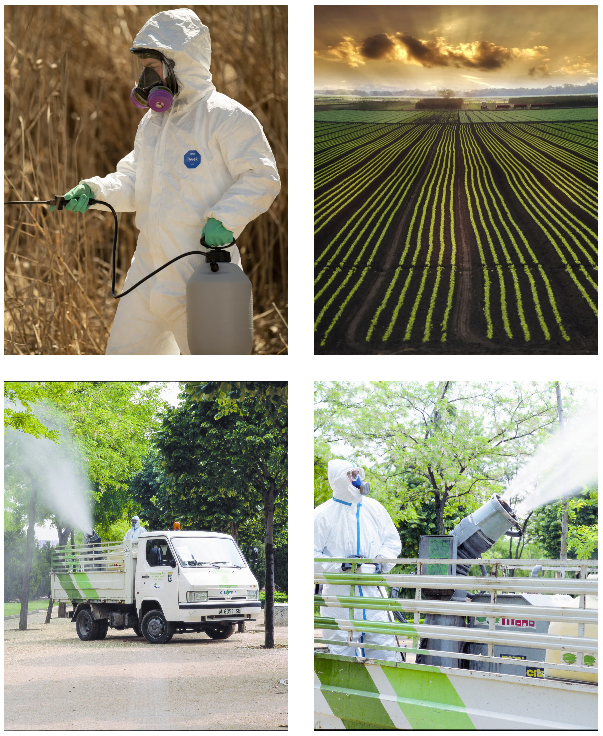
Although typical viral diseases amongst animals (swine fever, foot and mouth disease, fowl plague, etc.) cannot be transmitted to humans, people working in close contact with infected animals can easily carry (cross-transmit) the virus elsewhere. Many of these viruses can be carried on skin, hair and clothing, and can remain active for extended periods.
Additionally, the use of phytosanitary products to preserve crops makes agriculture one of the most dangerous professions. Therefore, anybody working with pesticides or animals should always wear the appropriate personal protective equipment.
Workers in the agricultural sector face two particularly dangerous types of risks.
Protection against phytosanitary products
When using phytosanitary products, it is recommended that CE category III type 4 chemical protective coveralls (against aqueous liquid aerosols) are used as a minimum. Category III type 4 protection provides effective protection against a range of aqueous (type 4) liquid aerosols, and active ingredients in solid particle form (type 5), and limited protection against liquid spraying (type 6).
Because the risk of exposure to lower or higher concentrations of active materials, solvents or diluents is especially high during preparation, application, cleaning, tank emptying and spray malfunctions, it is recommended that an apron or gown with an adequate chemical permeation barrier is worn over the coverall to protect the most exposed areas of the body against organic chemicals.
When choosing the right PPE, the chemical permeation data for the barrier fabric and phytosanitary product and diluent should be consulted.
Review DUPONT™ TYVEK® 600 Plus
https://www.firebreaksa.co.za/product/dupont-tyvek-600-plus/