
What is Avian Flu?
Avian Influenza (AI) or the bird flu is a virus that infects wild birds (such as ducks, gulls, and shorebirds) and domestic poultry (such as chickens, turkeys, ducks, and geese). Influenza A viruses are subdivided into subtypes. These subtypes are differentiated by variations in two viral surface proteins, hemagglutinin (H) and neuraminidase (N). There are 16 different H proteins and 9 N proteins that have been identified. There are a total of 144 different subtypes that can be designated by numbering particular combinations of these proteins (such as H5N1, H7N9, etc.). In addition to subtypes, these avian flu strains can be divided into two groups based on the ability of the virus to produce disease in poultry. These groups are known as low-pathogenicity avian influenza (LPAI) and high-pathogenicity avian influenza (HPAI). LPAI occurs naturally in wild birds and can spread to domestic birds. In most cases, it causes no signs of infection or minor symptoms in birds. HPAI spreads more rapidly than LPAI and has a higher death rate in birds. HPAI is often fatal in chickens and turkeys.
How is Avian Influenza spread?
Avian influenza in humans is rare. The most common route of infection is via direct or indirect contact with nasal, oral or fecal secretions from infected poultry. LPAI or “low-pathogenicity” avian influenza poses little threat to human health. HPAI or “high pathogenicity” avian influenza can spread from birds to humans as a result of extensive direct contact with infected birds. HPAI causes the most public health concerns due to the potential for the HPAI virus to mutate into a form that could spread from human-to-human
Who needs to be protected?
Authorities provide guidance on protection of individuals engaging in activities involving high contact with poultry or wild birds that have been confirmed or highly suspected of being infected with avian flu. (Avian influenza (bird flu) – GOV.UK – About Avian Influenza (AI) – europa.eu) These high contact activities include: • Handling birds • Collecting birds • Transporting birds • Culling and Disposal of birds • Cleaning and Disinfection of contaminated areas
Personal protective equipment (PPE) for controlling animal diseases
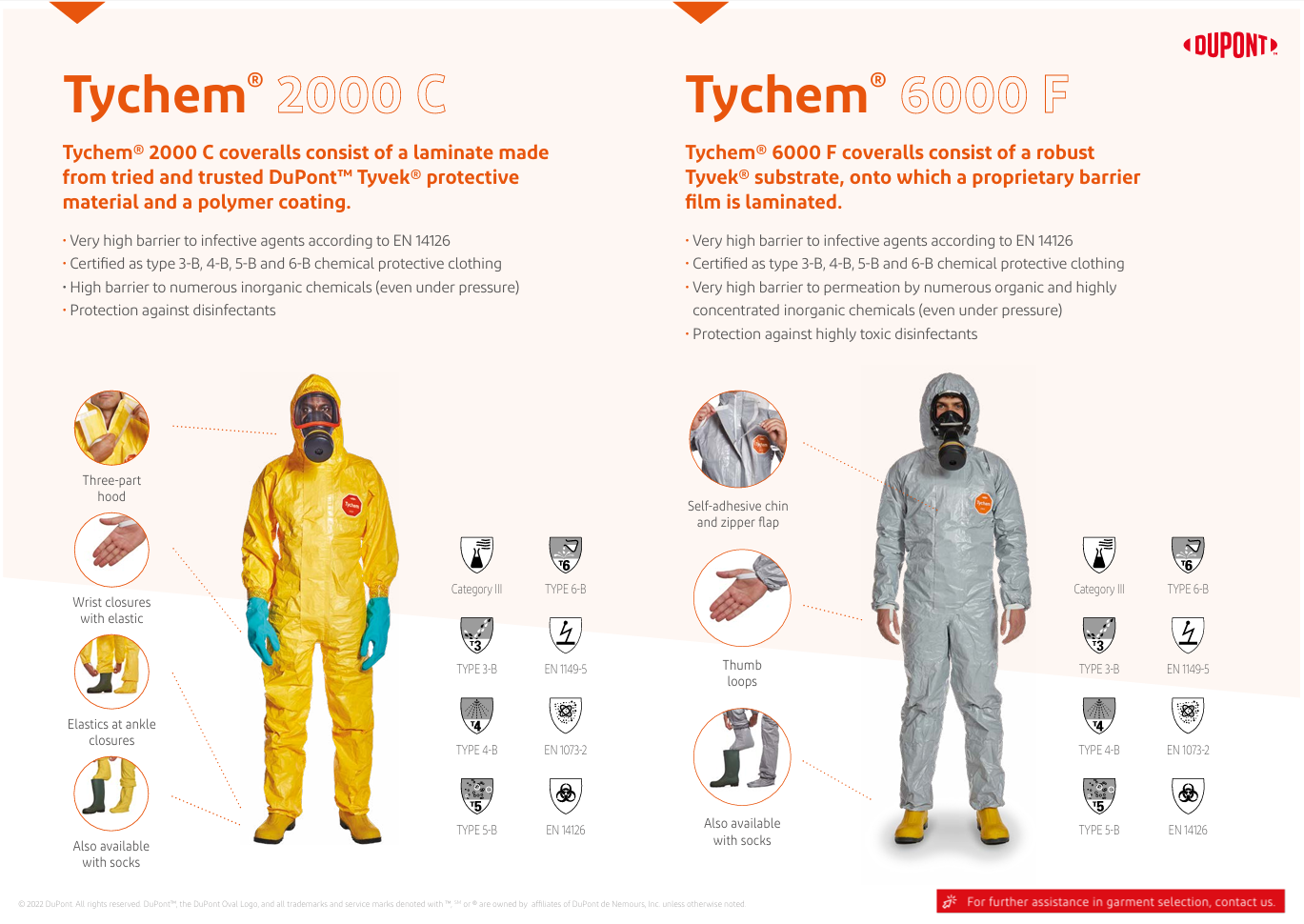
Suitable personal protective equipment (PPE) is accordingly required for the above activities in order to • prevent the disease from spreading into previously uninfected areas and • protect the personnel carrying out cleaning and disinfection from contact with the chemicals used for this purpose. Such PPE includes chemical protective garments which must provide a barrier to infective agents and to chemical splashes under pressure. DuPont Personal Protection can supply different models from the three product families, Tychem® 2000 C, Tychem® 6000 F and Tyvek® 600 Plus, which are particularly suitable for such applications. They meet the requirements for the norm EN 14126 (Protective clothing. Performance requirements and test methods for protective clothing against infective agents). They also provide protection against chemicals which are frequently used for disinfection.
Review DUPONT™ TYCHEM® 2000 C
https://www.firebreaksa.co.za/product/dupont-tychem-2000-c/
Review DUPONT™ TYCHEM® 6000 F Grey